
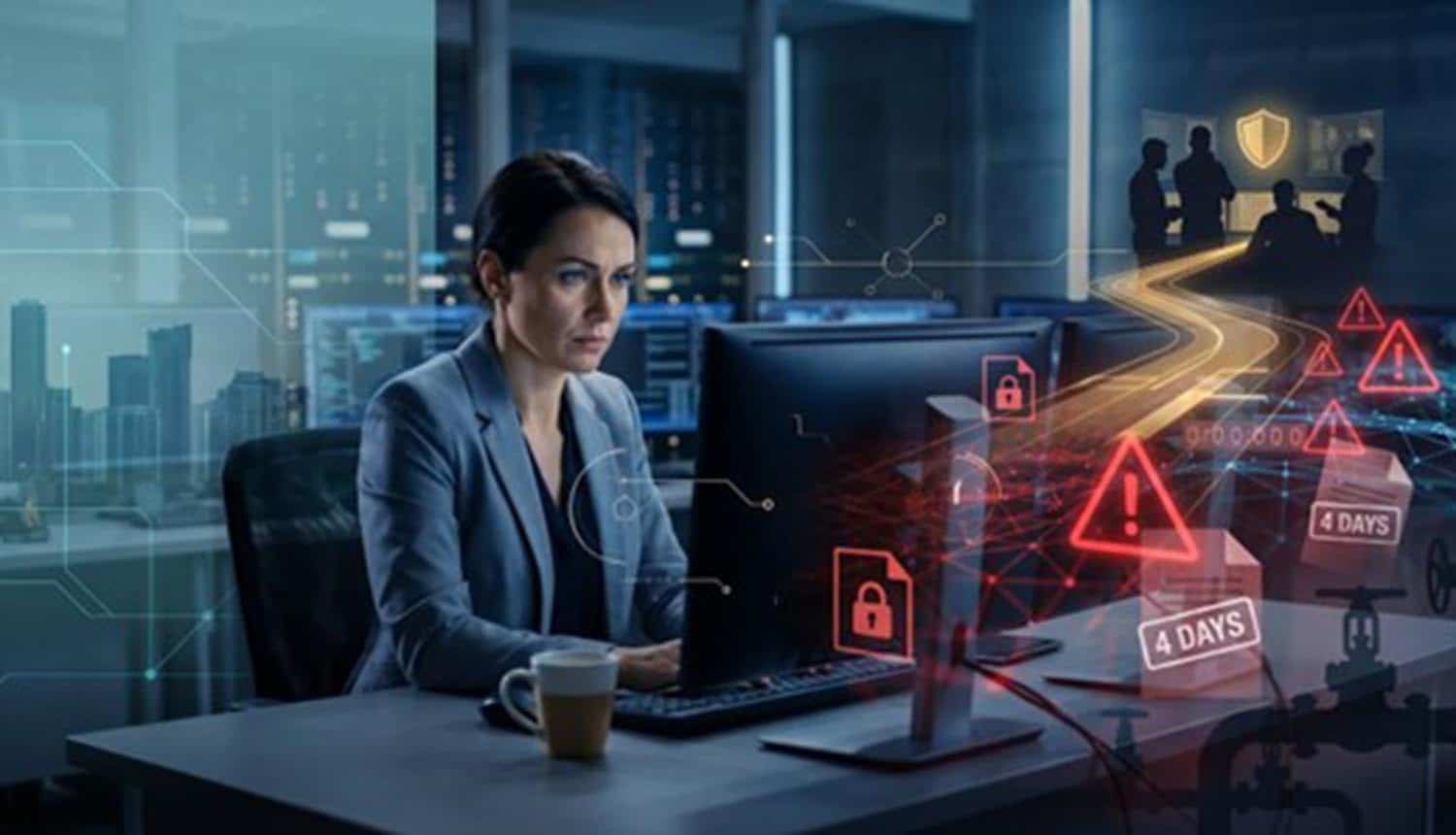

Cyber threats don’t wait for a calm Tuesday. One coffee sip can separate business as usual from ransom notes and regulator deadlines.
Line up your incident-response partner before that moment. The right team mobilizes fast, shrinks the blast radius, trims the bill, and lets everyone move on.
We parsed analyst reports, insurance-panel data, and candid client reviews to show who excels—and why. You’ll meet twelve firms scored on the factors that matter most when the sirens blare. If your team isn’t battle-ready, putting an incident-response team on standby is a single call away.
Ready to choose your ally? Let’s dive in.
Why incident response matters now more than ever
Attack crews now run like full-scale businesses. Ransomware groups publish price menus, service desks, and “customer satisfaction” surveys. They lock systems, copy data, and threaten leaks at once, forcing legal, security, and PR teams into a high-pressure scramble.
Regulators moved just as quickly. In the United States, public companies must report a “material” cyber incident within four business days. Europe and several Asian markets enforce similar timers. Miss the window, and you face fines, lawsuits, and headlines that drain customer trust.
Nation-state actors treat corporate networks as proxy battlefields. They slip in through supply-chain software or cloud gaps, hide for months, and siphon intellectual property, sometimes even knocking out critical infrastructure. Traditional perimeter tools rarely catch that level of stealth.
Operational technology raises the stakes further. One mis-set valve on a pipeline or factory floor can stop production for weeks. Responding inside these mixed IT-OT environments takes specialists fluent in both Windows logs and SCADA data.
Insurers have also tightened the rules. Many policies now insist on a vetted incident-response retainer before they will cover ransom, recovery, or liability costs. Preparation has shifted from “nice to have” to a baseline cost of doing business in 2026.
For instance, Sygnia’s Incident Response Readiness Retainer is one model many insurers already list on their approved panels.
Its top tier promises a remote-response SLA as low as two hours and en-route arrival within 24 hours—benchmarks that map directly to the “prompt action” clauses found in most 2026 cyber policies.
Unused retainer hours can be rolled into tabletop drills or red-team exercises, so the spend keeps strengthening defenses even if the hotline never rings.
Threats move faster, penalties hit harder, and patience from boards or customers is gone. Securing a proven incident-response partner today is the simplest way to prevent tomorrow’s crisis from snowballing.
How we picked the leaders (and kept the math honest)
We set out to create a board-ready ranking, not a popularity contest. The scoring model mirrors what happens in the first minutes after an emergency call.
We rated each firm on seven factors that shape outcomes: response speed, forensic depth, ransomware skill, tooling maturity, customer and analyst sentiment, global reach, and pricing clarity. Speed and depth count twice because they matter most when time is tight.
Data came from three sources: the Forrester Wave for Cybersecurity Incident-Response Services (Q2 2024), insurer-panel requirements, and 150-plus client reviews and provider datasheets.
Each provider earned 0–10 points per factor. We applied the weights, totaled 100, and asked two independent analysts to audit every line. When scores tied, we gave the edge to the firm with a documented win in a recent high-pressure breach.
All twelve companies clear a strict bar; their final order simply highlights where each excels so you can match strengths to your own risk profile.
1. Sygnia: military-grade responders for elite breaches
Sygnia grew out of Israel’s cyber-intelligence community and still moves with special-forces urgency. When a Fortune 100 network lights up with suspicious traffic, the firm’s “battle-mode” team can join a video bridge in under an hour and board a plane, if needed, the same day. Clients appreciate that senior operators, not junior triage staff, lead the first call.
Speed is just the start. Sygnia pairs deep forensics with crisis coaching, guiding CISOs on technical fixes while briefing boards on disclosure, ransom stance, and investor optics. Because the company stays vendor-agnostic, it plugs into any EDR or SIEM you run, then layers in custom hunt scripts to remove hidden backdoors.
For organizations that want one partner from first alert to final recovery, its promise to get a complete incident response folds containment, remediation, and post-incident hardening into a single engagement.
The service carries a premium price, but discretion matches the cost. Sygnia resolves many incidents that never reach the press, a record that attracts banks, defense contractors, and critical-infrastructure operators who cannot risk public drama. If you value rapid action and quiet execution over brand spotlight, Sygnia earns the top slot.
2. Mandiant (Google Cloud): veteran responders with global reach
Mandiant helped write the modern breach-investigation playbook. Its analysts uncovered the SolarWinds supply-chain hack, coined the “APT” naming system, and still publish some of the sharpest threat reports in the field. Hiring Mandiant gives you more than 500 threat-intelligence experts across 30 countries, able to run simultaneous war rooms on three continents.
Engagement is straightforward. You can sign a no-cost retainer that pre-negotiates terms and pay only when you activate it. That arrangement trims procurement time and speeds response, a relief under the SEC’s four-business-day disclosure rule.
During an incident, Mandiant combines deep forensics with Google Cloud’s Chronicle telemetry, so investigators see a full timeline of attacker activity. The team also produces legal-grade reports for regulators and insurers, helping executives control the narrative rather than chase rumors.
Rates sit near the top of the market, and global crises can stretch calendars. Even so, when you need a brand that reassures boards, auditors, and outside counsel at once, Mandiant still sets the bar.
3. CrowdStrike Services: lightning-fast response backed by Falcon XDR
CrowdStrike earned its reputation for speed, and that urgency powers its incident-response arm. Once you sign, responders deploy lightweight Falcon sensors across endpoints, giving instant visibility and, more importantly, the ability to isolate infected hosts in under 10 minutes.
Because the platform is cloud native, you see a live map of attacker movement while investigators work. This tight loop between tooling and talent often shrinks a sprawling compromise to a contained blip before daylight.
Threat intelligence adds another edge. CrowdStrike tracks more than 200 adversary groups and bakes those insights into automated detections, so responders rarely start from a blank screen. A follow-the-sun staffing model keeps momentum no matter where trouble begins.
The trade-off? You must be ready to deploy and later license Falcon technology, since it anchors the playbook. Most clients see that as a benefit, especially when the first victory—stopping an active ransomware spread—arrives in the opening hour.
If your priority is rapid containment plus a lasting uplift in detection, CrowdStrike delivers a clear advantage.
4. Booz Allen Hamilton: government-grade muscle for commercial breaches
Booz Allen’s DarkLabs unit learned its craft hunting nation-state actors for U.S. defense clients. That heritage is obvious the moment their responders join a bridge: conversation pivots to attacker objectives, counter-intel moves, and how to harden the environment for the next strike, not just wipe malware.
Scale is real. In 2025 the team worked on roughly 1,300 incidents across government, finance, and healthcare, with playbooks that handle everything from stealthy data theft to smash-and-grab ransomware. The 2021 Tracepoint acquisition added mid-market savvy, so smaller enterprises can now afford Booz Allen expertise.
Clients value the one-stop support model. While the forensics crew isolates command-and-control traffic, Booz Allen’s legal specialists craft regulator-ready timelines, and former public-affairs officers prepare executive talking points. The response stays technically sharp yet boardroom fluent.
Caveats remain. Most specialists are U.S.-based, so overseas firms may receive more remote help than on-site visits. The engagement process also feels formal compared with boutique shops. Still, when geopolitical stakes rise or regulators circle, Booz Allen supplies experience that few competitors can match.
5. Deloitte Cyber Incident Response: big four breadth meets breach triage
Deloitte arrives with a deep bench of specialists and a playbook honed in heavily regulated sectors. When a multinational bank or pharma giant is breached, Deloitte can drop technical responders, privacy lawyers, crisis-communications advisors, and regulatory liaisons into the same virtual room within hours. That synchronization keeps investigation, legal requirements, and stakeholder messaging moving together.
On the keyboard side, Deloitte’s responders lean on AI-assisted forensics that sift disk images and log files at cloud speed. The firm has committed roughly $2.3 billion to Gen-AI security automation, and early engagements show faster root-cause findings and tighter dwell-time estimates.
Global reach is another win. With incident-response teams in more than 80 countries, Deloitte can honor data-sovereignty laws while still pulling a follow-the-sun response. Boards like the familiarity factor: if Deloitte already handles their audits or tax work, adding an IR retainer feels like an extension of an existing relationship rather than a risky new vendor.
Paperwork is heavy and day rates run high. Smaller tech firms may find the consulting cadence slow. For Fortune-scale organizations juggling regulators on several continents, though, Deloitte’s depth and governance savvy justify the spend.
6. Kroll: high-volume ransomware and forensics workhorse
Kroll appears on nearly every major cyber-insurance panel, so when policyholders hit the panic button this team often gets the call. That steady pipeline creates repetition and expertise: in 2025 Kroll handled about 3,200 incident-response engagements. Volume builds muscle. Investigators move quickly from imaging drives to tracing attacker command paths, guided by playbooks refined in thousands of similar cases.
Ransomware is the standout. Negotiators track each criminal group’s tactics, note who offers discounts and who reneges, and fold that insight into live chats with threat actors. Meanwhile, forensic examiners preserve evidence that satisfies regulators and future litigation, reassuring legal teams worried about liability.
Clients also praise Kroll’s bedside manner. Consultants translate arcane artifacts into plain language, coach executives on breach notifications, and deliver a concise post-mortem that doubles as an improvement roadmap. You will not see flashy dashboards or proprietary XDR tools, but if you value pragmatic expertise, thorough documentation, and insurer-approved rates, Kroll is a dependable choice.
7. Palo Alto Networks Unit 42: cloud-savvy hunters with built-in XDR firepower
Unit 42 blends Palo Alto Networks’ threat-research heritage with the incident-response skills gained through the Crypsis acquisition. That history makes the team highly effective in hybrid estates where cloud workloads, SaaS apps, and on-prem endpoints mix into one broad attack surface.
An engagement starts with rapid deployment of Cortex XDR sensors. Within an hour, responders trace lateral movement from AWS accounts to forgotten laptops and block malicious sessions in real time. Because the tooling and the responders share one parent company, telemetry flows without turf battles.
Unit 42 analysts publish flagship threat reports, so they often spot attacker fingerprints before the first log sweep finishes. That intelligence advantage is crucial during double-extortion ransomware cases, where knowing a gang’s leak patterns helps negotiators hold firm.
Some clients worry about vendor lock-in. In practice, sensors uninstall cleanly once the crisis ends, and many customers decide to keep them because the visibility outperforms their older patchwork SIEM.
If your breach begins in the cloud or spans regions and technologies, and you want responders fluent in containers, microservices, and identity sprawl, Unit 42 is a practical choice.
8. Accenture Security: global consulting scale with end-to-end recovery
Accenture blends consulting polish with incident-response grit. Its 12 Cyber Fusion Centers across four continents mean a breached subsidiary in Singapore and a data center in Frankfurt get the same rapid attention without midnight hand-offs.
Many providers leave after containment, but Accenture stays for the rebuild. Cloud engineers restore workloads, identity specialists close risky federations, and change-management teams guide you through post-mortem control upgrades. For firms without deep internal staff, this field-to-finish model trims downtime and avoids vendor sprawl.
Threat intelligence flows from the iDefense unit, which tracks geopolitical campaigns and criminal marketplaces. During an active breach, responders tap that feed to predict the attacker’s next move, shaving hours off lateral-movement hunts.
Accenture often already runs clients’ application stacks or audits their controls, so procurement is quick. The trade-off is cost: expect premium consulting rates. If you only need a tight surgical clean-up, the full-service engine may feel heavy.
For multinational enterprises that want triage, regulatory guidance, and infrastructure rebuild under one contract, Accenture offers convenience that keeps the board calm and the business online.
9. IBM Security X-Force: methodical muscle for complex enterprises
IBM has investigated breaches for decades, and that experience shows in a disciplined playbook. Engagement starts with a prepaid retainer you can even purchase through AWS Marketplace, a perk for procurement teams that prefer one-click contracts.
During an incident, X-Force responders rely on IBM’s QRadar SIEM, Resilient SOAR, and cloud forensics labs to sift terabytes of logs while preserving chain-of-custody. That rigor appeals to banks, retailers, and governments that handle auditors by name.
IBM maintains 14 regional labs, so evidence collected in the EU stays in the EU. The program draws on the annual X-Force Threat Intelligence Index, built from billions of data points across endpoint devices and prior engagements, to guide hunting strategy.
Some critics say IBM moves cautiously, following a checklist where boutique firms improvise. If your environment spans mainframes, containers, and vendor sprawl, that steady approach often proves safer.
10. Verizon Threat Research Advisory Center: network insight meets breach response
Verizon’s annual Data Breach Investigations Report draws on 16,312 incidents, and that same pipeline powers its incident-response arm. Investigators start with a data-driven map of tactics, entry points, and likely fallout.
Each engagement assigns one investigative liaison who stays with your case from first call to final debrief. Behind that point person sits a global grid of nine security operations centers and six forensic labs, so disk images never cross borders that privacy laws forbid.
Because Verizon controls a vast internet backbone, responders can trace exfiltration routes through carrier-grade netflow data and work with upstream peers to cut command-and-control links. During a recent supply-chain breach, one client credits this network view for blocking a second wave of traffic before it left the building.
Verizon is not the boutique you call for firmware reverse engineering, and some customers find the telecom ticket system impersonal. If you want a broad-shouldered partner that combines breach forensics with unmatched traffic visibility, and you like flexible retainer hours, Verizon is a practical, data-rich choice.
11. Secureworks: intelligence-driven IR for lean security teams
Secureworks built its name in managed detection, and that continuous telemetry now powers its incident-response practice. When you ring the 24×7 hotline, responders already draw on fresh intelligence from the Counter Threat Unit and automated playbooks inside the Taegis XDR platform.
For organizations without a round-the-clock SOC, that blend is a relief. Investigators deploy lightweight agents, sweep endpoints for compromise, and provide remediation scripts that in-house admins can run without deep command-line skills.
Experience is broad. In 2025 Secureworks handled about 650 stand-alone IR engagements, so the team knows how to map unfamiliar networks, gather forensics, and deliver reports that please insurers and compliance auditors.
Pricing targets the mid-market, yet the bench includes veterans from headline breaches. If you want rapid containment plus a clear lessons-learned debrief, and you prefer collaborative coaching over opaque black-box work, Secureworks is the right-sized fit.
12. Coveware by Veeam: ransomware negotiation specialists
Coveware by Veeam focuses on one slice of the breach lifecycle: extortion response. When attackers lock files and demand millions in cryptocurrency, Coveware steps in as the calm voice between anxious executives and profit-driven criminals.
Negotiators open a secure chat with the threat actor, confirm stolen data, and buy time while your IT team restores systems. A case database covering more than 900 negotiations in 2025 tracks each gang’s reliability, average discount, and relapse rate, giving clients leverage during high-stakes talks.
If payment becomes unavoidable, Coveware manages the logistics end to end—sanctions checks, cryptocurrency sourcing, and monitored decryption. Quarterly ransomware reports then translate hard lessons into readiness guidance.
Because Coveware handles ransom and leak threats only, you still need a technical IR partner for forensics and eradication. Pairing Coveware with a broader firm creates a strong combo: containment on one side, negotiation expertise on the other. For organizations staring at a ticking ransomware clock, that specialization can spell the difference between controlled recovery and public fallout.
At-a-glance scorecard: how the 12 stack up
The table below condenses our 100-point model into the five factors boards cite most often—speed, expertise, ransomware skill, tooling maturity, and overall score.
| Rank | Provider | Speed (20 %) | Expertise (20 %) | Ransomware (15 %) | Tooling (15 %) | Total |
|---|---|---|---|---|---|---|
| 1 | Sygnia | 10 | 10 | 9 | 8 | 89.5 |
| 2 | Mandiant | 9 | 10 | 8 | 8 | 88 |
| 3 | CrowdStrike | 9 | 9 | 8 | 10 | 88 |
| 4 | Booz Allen | 8 | 10 | 8 | 8 | 83 |
| 5 | Deloitte | 7 | 9 | 8 | 9 | 82 |
| 6 | Kroll | 8 | 9 | 9 | 7 | 81 |
| 7 | Accenture | 7 | 9 | 8 | 8 | 81 |
| 8 | Palo Alto Unit 42 | 8 | 8 | 8 | 9 | 80.5 |
| 9 | IBM X-Force | 7 | 9 | 7 | 8 | 78 |
| 10 | Verizon | 9 | 7 | 7 | 7 | 78 |
| 11 | Secureworks | 8 | 8 | 7 | 8 | 76.5 |
| 12 | Coveware | 9 | 7 | 10 | 6 | 78 |
Quick takeaways:
- The top three cluster within two points, each excelling for different reasons: Sygnia on raw speed, Mandiant on depth, CrowdStrike on tech integration.
- Coveware’s total matches bigger rivals despite narrow scope because its ransomware specialty scores a perfect ten.
- Speed leaders are not always tooling leaders; Verizon responds fast thanks to telco reach, yet invests less in proprietary IR platforms.
Use this matrix as a gut-check when someone asks, “Why not pick the cheapest vendor?” The numbers show exactly where trade-offs live.
How to choose the right incident-response partner
Start with your threat profile, not vendor logos. If ransomware tops the risk register, favor firms with strong negotiation records and data-recovery playbooks. If you operate in twenty jurisdictions, lean toward providers that keep labs or staff in every region where you store data.
Next, map internal gaps. Already run an EDR platform? CrowdStrike or Unit 42 can drop straight into it. Short on legal or PR muscle? Deloitte and Booz Allen arrive with multidisciplinary squads that brief regulators and calm investors in the same sitting.
Budget still matters, but measure it against outage cost. A $75,000 retainer that guarantees a one-hour kickoff often costs less than a single extra day of downtime. Check your cyber-insurance policy too; many carriers require pre-approved providers.
Finally, test the chemistry early. Schedule a tabletop drill, gauge communication style, and watch how evidence flows. An incident is no time to discover mismatched expectations. Pick the partner who proves helpful while the room is still quiet—you will thank yourself when the alarms sound.
Incident-response FAQ
Do I really need a paid retainer?
If you handle regulated data or run 24×7 operations, yes. A pre-negotiated retainer removes contract delays and secures a service-level agreement that can shave hours, sometimes days, off containment. Smaller firms with tight budgets can still choose a no-cost option such as Mandiant’s standby model, which beats scrambling for signatures mid-crisis.
How much will an engagement cost?
Plan on $300–$600 per consultant hour or $50,000–$150,000 for a mid-sized breach. Ransomware cases that include negotiation support trend higher. Many cyber-insurance policies reimburse up to 80 percent of these costs when you use an approved vendor.
Will my insurer dictate which firm I can hire?
Often. Most carriers keep a panel of vetted providers. Engage an off-panel firm without permission and you risk reduced coverage. Read the policy’s fine print before signing any IR contract.
Should I involve law enforcement?
For serious incidents, especially data theft or nation-state activity, yes. Federal agencies such as the FBI and CISA can provide threat intelligence and help trace funds. Your IR partner will coordinate to protect evidence.
How long does a typical investigation take?
Straightforward ransomware containment can close in under a week. Complex espionage or supply-chain breaches may need a month or more of iterative forensics, eradication, and monitoring. Providing quick environment access and clean log data shortens the timeline.
