
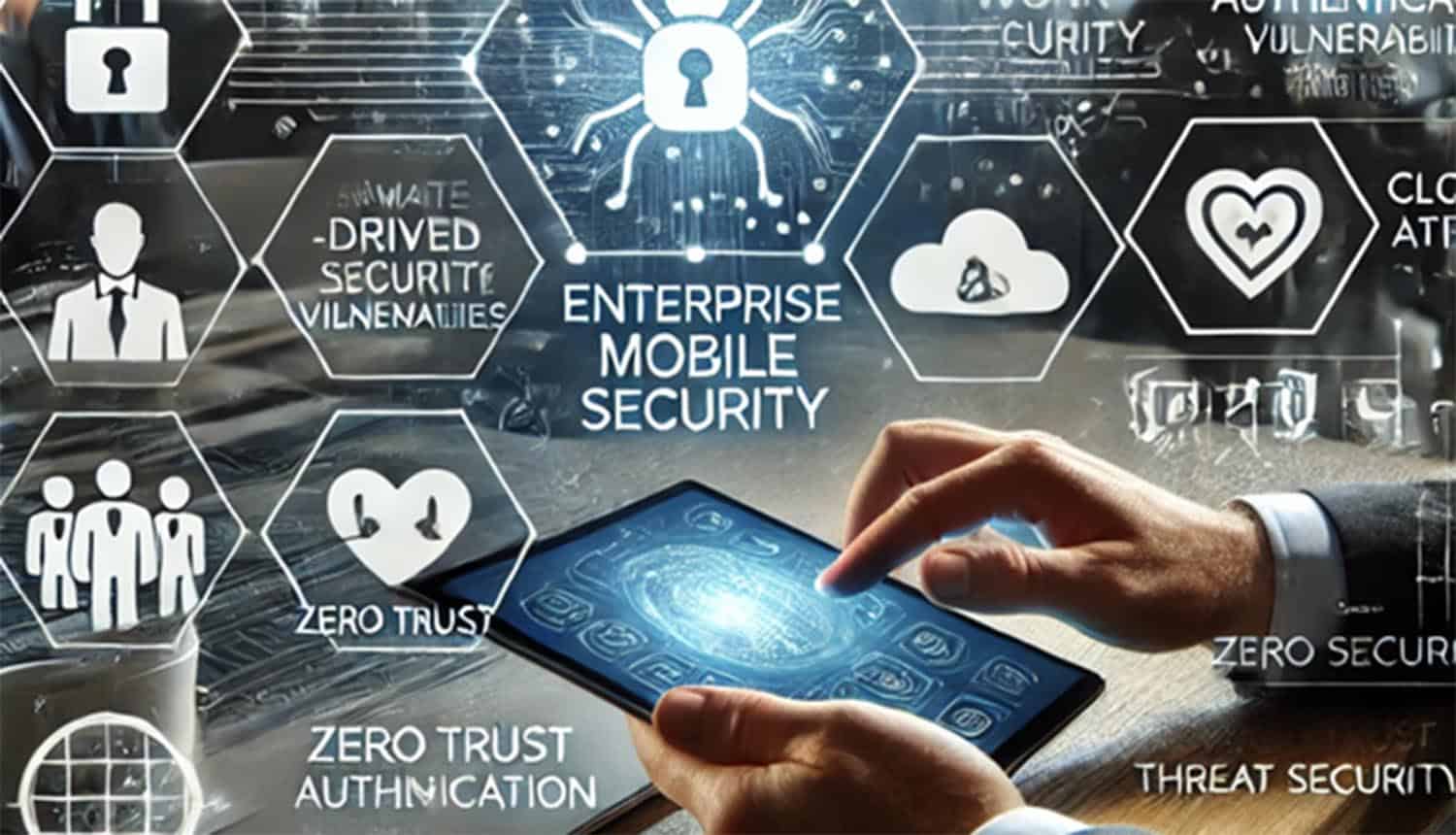

As we tether more of our business operations to mobile devices, from on-the-go access to CRM systems to instant data analytics at our fingertips, the stakes get exponentially higher. With each convenience comes a potential threat lurking in the shadows. Mobile technology has woven itself into the fabric of our business processes, making it indispensable and exposing us to new risks.
These aren’t just your everyday software bugs or phishing scams; we’re talking about sophisticated threats that evolve as quickly as the technology itself.
In this article, we’ll dive into how these threats have grown in complexity and what solutions are shaping up to keep our mobile business operations secure and seamless.
Challenges in Enterprise Mobile Security
Imagine malware but with a brain. That’s pretty much what we’re dealing with regarding AI-driven threats in mobile security. These aren’t your run-of-the-mill viruses; these are smart learning systems that adapt faster than traditional security measures can keep up.
According to experts at Millennium and ISACA, this new breed of malware uses artificial intelligence to learn from past attacks, figuring out how to bypass security protocols we once thought were bulletproof. For a detailed look at these and other types of mobile cyber attacks, read this in-depth guide. It’s like having an endlessly evolving enemy, always finding new ways to sneak past your defenses.
Remote Work Vulnerabilities
The shift to remote and hybrid work models has opened the gates to a range of security risks. With employees logging in from everywhere, often on personal devices, the line between professional and personal data blurs.
Firms like Marcum LLP and Verizon point out that BYOD (bring your device) policies, while great for flexibility, are a playground for cyber threats. Every unsecured Wi-Fi connection and personal app installed on a device that accesses company data could be a potential breach point.
Insecure Application Interfaces
Think of every mobile app as a door to your data—some come with multiple locks, while others barely latch shut. Infinum highlights how insecure authentication and authorization mechanisms in mobile apps present significant risks.
These apps can inadvertently offer hackers a VIP pass to corporate data without robust security, leading to severe data breaches. It’s a glaring vulnerability, especially in apps that haven’t been rigorously tested for security flaws.
Cloud Security Risks
Cloud computing was supposed to be our secure digital nirvana, right? Well, it turns out it has its share of issues. As Marcum LLP notes, data breaches and account hijacking are still significant threats in cloud environments.
Much of this concerns how we configure our APIs and cloud settings. A minor oversight in settings can lead to major breaches, making stringent cloud security practices non-negotiable.
Social Engineering and BEC Scams
Here’s where the human factor kicks in. Social engineering and Business Email Compromise (BEC) scams thrive on manipulation. According to Marcum LLP, attackers are no longer just hacking systems; they’re hacking people.
Using sophisticated phishing techniques, they trick employees into making unauthorized transactions or revealing sensitive information. It’s less about cracking codes and more about exploiting trust and human error.
Supply Chain Attacks
Our network is only as secure as its weakest link, often not within our walls but somewhere in our supply chain. GBS points out that third-party software and hardware can be Trojan horses, hiding vulnerabilities compromising enterprise security. Ensuring that every component in our supply chain is secure has become paramount, as any neglected aspect can open the door to cybercriminals.
Solutions and Best Practices
Let’s beef up security with a double whammy: multi-factor authentication (MFA) and password managers. Think of MFA as your digital bouncer—it doesn’t let anyone in without verifying their ID. Tools like LastPass and advice from Verizon highlight how crucial it is to layer up those security checks.
And password managers? They’re the secretaries of the digital world, keeping your passwords organized and out of the sticky hands of cybercriminals. It’s about making access tougher for the bad guys while keeping it smooth for the good ones.
Regular Patching and Updates
Keeping your mobile devices and apps updated isn’t just about snagging the latest features; it’s a critical defense tactic against cyber attacks. Like a flu shot for your tech, these updates patch security vulnerabilities and fortify defenses.
LastPass stresses that this routine maintenance can shut down malicious exploits before they even start. It’s a simple step, but it’s one of the most effective ways to keep your digital environment safe.
Zero Trust Framework
Trust is great, but in the digital world, it’s a vulnerability. That’s where the Zero Trust Framework comes in. According to experts at 42gears and ISACA, adopting a zero-trust model means no one and nothing gets a free pass.
Every device and every user is verified continuously, making sure that the only people accessing your resources are those who really should be. It’s like having a skeptical security guard who double-checks everyone’s ID at the door relentlessly.
Advanced Threat Detection and Response
We’re not just fighting amateurs here; we’re up against pro-level hackers. Advanced threat detection and response systems are like having a high-tech alarm system that detects burglars and locks them out.
Selenium and Verizon point out that these systems monitor suspicious activity and react in real-time, preventing threats from causing harm. This isn’t just defense; it’s smart, proactive protection that adapts as fast as the threats do.
Employee Training and Awareness
The best security technology can still be undermined by one click on a phishing email. That’s why Marcum LLP emphasizes the importance of turning your team into a human firewall through ongoing training and awareness.
Educating employees about the risks of social engineering and common phishing tactics arms them with knowledge and turns them into active participants in your security strategy. After all, an aware employee is your first line of defense.
Secure Cloud Configurations
Lastly, let’s talk cloud safety. Marcum LLP advises that securing your cloud environment isn’t a one-time setup; it requires ongoing vigilance. This means conducting regular vulnerability assessments and ensuring that cloud settings and APIs are locked down tight. It’s about creating a fortress in the cloud, with every gate carefully monitored and controlled to prevent unwanted access.
Conclusion
Wrapping it all up, the mobile security landscape is a bit like a high-stakes game of cat and mouse, with threats constantly evolving and enterprises scrambling to keep up. From AI-driven malware that learns on the go to the vulnerabilities introduced by remote work and insecure app interfaces, the challenges are as diverse as they are daunting.
But it’s not all doom and gloom. Solutions like multi-factor authentication, regular updates, zero trust frameworks, advanced threat detection, employee training, and secure cloud configurations provide a robust toolkit for defending against these threats. Staying proactive and well-informed is not just advisable; it’s essential.
Enterprises must continuously adopt and adapt these security measures to protect sensitive data and maintain business integrity. Remember, in the world of mobile security, being reactive isn’t an option—it’s about staying one step ahead.
