
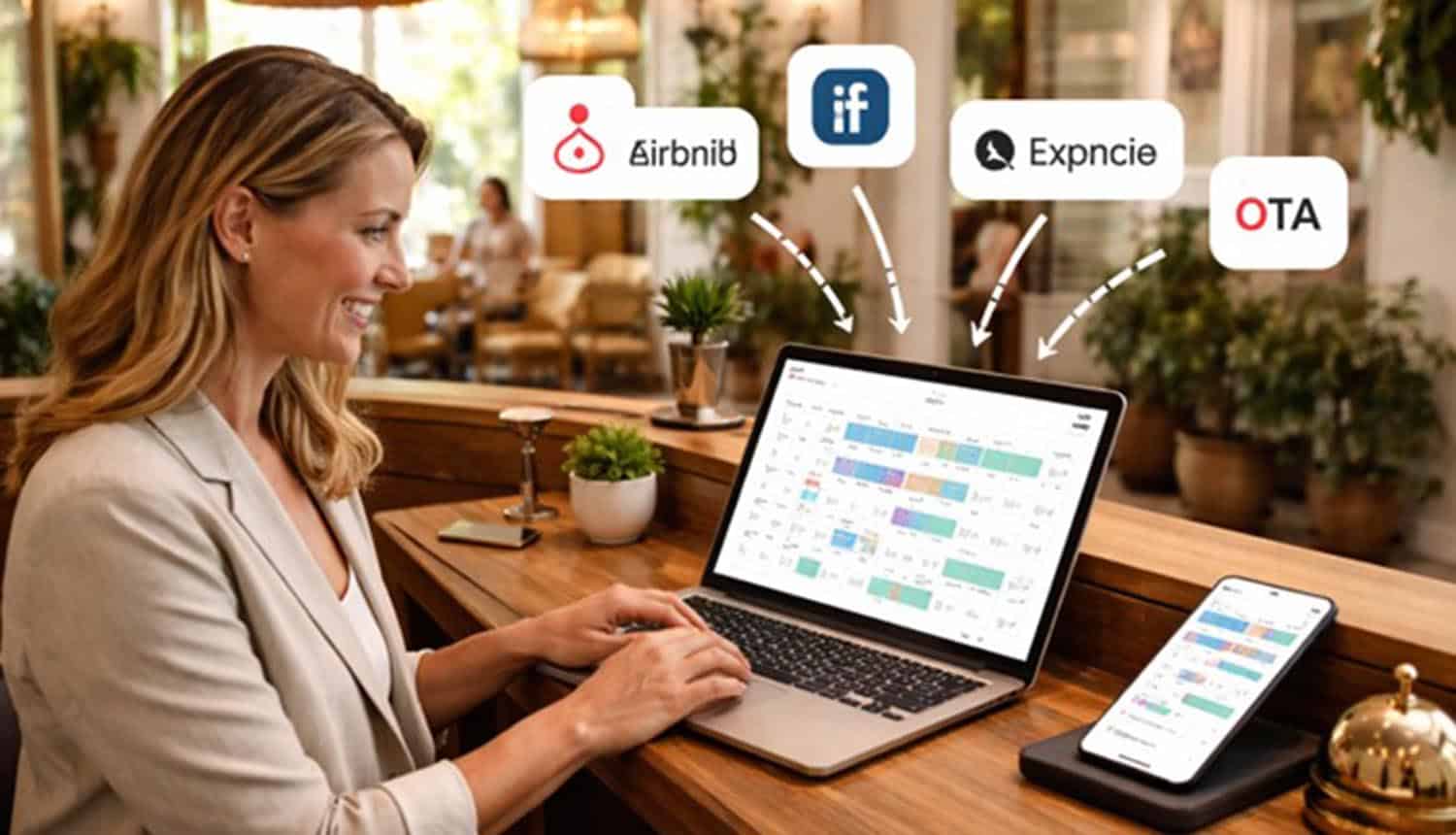

If you’ve ever had a guest arrive with a confirmed reservation that your front desk can’t find, or worse, you’ve had to walk a guest because two channels sold the same room, then PMS and channel manager sync and integration isn’t a “nice-to-have,” it’s the operational backbone that keeps your inventory accurate and your reputation intact. For owners and managers who want the best PMS system for small hotels, the real win isn’t flashy features; it’s a calm, predictable day where bookings flow into one reliable source of truth.
Small hotels win by being personal, responsive, and consistent. Technology should amplify those strengths, not create extra steps. Yet many properties still juggle multiple extranets, spreadsheets, messaging apps, and manual updates often because “that’s how we’ve always done it.” The result is not only wasted time, but also unnecessary stress, staff burnout, and revenue leakage that’s hard to spot until it becomes a pattern.
The hidden cost of “almost synced” operations
When systems don’t talk to each other cleanly, the damage doesn’t always show up as a dramatic overbooking. More often, it’s a slow drip:
- Rate mistakes: A midweek rate change goes live on one channel but not the other, leaving you under- or overpriced without realizing it.
- Inventory drift: One room type is closed on the PMS, but still sells online.
- Delayed updates: Cancellations and modifications don’t reflect promptly, creating phantom occupancy.
- Lost upsell opportunities: Staff spends time fixing errors instead of improving guest experience.
- Team tension: Front desk blames reservations, reservations blame housekeeping, and everyone blames “the system.”
For small properties, the margin for error is thin. A single operational breakdown can undo weeks of good reviews. That’s why connectivity isn’t just an IT concern; it’s a business strategy.
What “good sync” actually means (without the technical jargon)
In practical terms, strong integration means the PMS and channel manager work like a well-run relay team:
- Availability updates quickly and accurately when a booking is created, modified, or cancelled.
- Rates and restrictions (minimum stay, arrival restrictions, stop-sell) can be pushed consistently, not channel-by-channel.
- Reservations land in the PMS automatically with the details staff need to deliver a smooth stay.
- The PMS remains the master record, so staff aren’t forced to cross-check multiple places.
- Errors are visible and actionable, not silent until something breaks.
If you’re evaluating a small hotel PMS, think less about a long feature list and more about whether the system keeps your daily operations stable under real-world conditions: last-minute cancellations, no-shows, early arrivals, channel promotions, and seasonal rate shifts.
The “small hotel” reality: your systems must reduce work, not add it
Large hotels can afford specialized roles such as revenue manager, distribution specialist, night auditor, and IT support. Small hotels can’t. In many properties, the owner is also the revenue manager, the problem solver, and sometimes the person greeting guests at breakfast.
That’s why the best operational technology for a small property has three traits:
- Clarity: Your team should immediately understand what the system is telling them.
- Speed: Updates shouldn’t take “eventually” to reflect across channels.
- Resilience: When something goes wrong, recovery is straightforward and doesn’t require guesswork.
A powerful but confusing system can be worse than a simple, reliable one. Your goal is not sophistication, it’s control.
A practical integration checklist you can use before switching anything
Whether you’re setting up integration for the first time or fixing a shaky one, use this checklist to evaluate your current setup:
1) Decide who is the “source of truth.”
You should have one place where inventory and reservations are unquestionably correct, usually the PMS. If staff are double-checking multiple sources “just to be safe,” the process is already broken.
2) Standardize room types and rate plans
Integration problems often start with a messy structure:
- Room types that don’t match channel naming
- Rates are built differently on different OTAs
- Packages mixed into standard rate plans
Before connecting systems, simplify your offer. Fewer, clearer rate plans mean fewer sync issues.
3) Confirm two-way behavior for changes and cancellations
Many teams assume “two-way” means everything syncs both directions equally. In reality, some updates might flow better in one direction than the other. You want cancellation and modification handling to be dependable, because that’s where inventory accuracy often collapses.
4) Map carefully, then test like a skeptic
Mapping is not a formality; it’s the foundation. After mapping:
- Make a test booking on a channel
- Modify dates
- Modify guest count
- Cancel the booking
- Verify every step lands correctly and updates availability.
If your team can’t trust the results of a simple test, don’t expect the system to survive high-season pressure.
5) Define “what happens if…”
Strong operations plan for exceptions:
- What if a channel is down?
- What if the internet drops?
- What if a rate fails to push?
- What if a booking arrives with missing details?
You don’t need a complicated playbook, just a clear escalation path and a simple routine for spotting issues early.
The daily routine that keeps sync healthy (and staff confident)
Even excellent integrations benefit from a light daily rhythm. The point isn’t to babysit the technology, it’s to prevent small issues from growing.
A simple approach:
- Morning (5 minutes): Check arrivals, cancellations, and availability for top room types.
- Midday (2 minutes): Verify rates/restrictions match your strategy for the next 7 days.
- Evening (3 minutes): Scan for unusual patterns: sudden pickup spikes, unexpected gaps, or rooms that look “stuck.”
This routine also builds staff confidence. When people know there’s a process, they stop feeling like every issue is a personal failure and start treating it as a solvable workflow.
How better sync supports better revenue without becoming “salesy.”
When your inventory and rates are accurate across channels, you unlock operationally simple revenue improvements:
- Fewer forced discounts to recover from errors
- More confident rate changes because you trust they’ll land correctly
- Better length-of-stay controls during peak periods
- Cleaner reporting, making performance decisions easier
In other words, the system doesn’t “sell” for you; it removes friction so your existing strategy actually works.
The guest experience that most hotels overlook
Guests rarely praise a hotel for its software. They praise the outcomes: smooth check-in, correct room type, clear communication, and a sense that the property is well-run.
Reliable sync directly supports that:
- The front desk has accurate reservation details
- Housekeeping is less interrupted by last-minute chaos.
- Owners spend less time firefighting and more time hosting.g
For small hotels, that shift matters. Your brand is built on trust and warmth. Every operational glitch chips away at that value.
A final thought for small hotel owners
Technology should never replace hospitality, but it should protect it.
If your days are filled with manual updates, channel checks, and “just in case” confirmations, you’re paying a hidden tax in time and stress. The smartest move is not chasing complexity. It’s choosing tools and workflows that let your team focus on what small hotels do best: delivering a stay that feels personal, consistent, and cared for.
When your systems are truly aligned, you stop managing chaos and start managing your business.
