
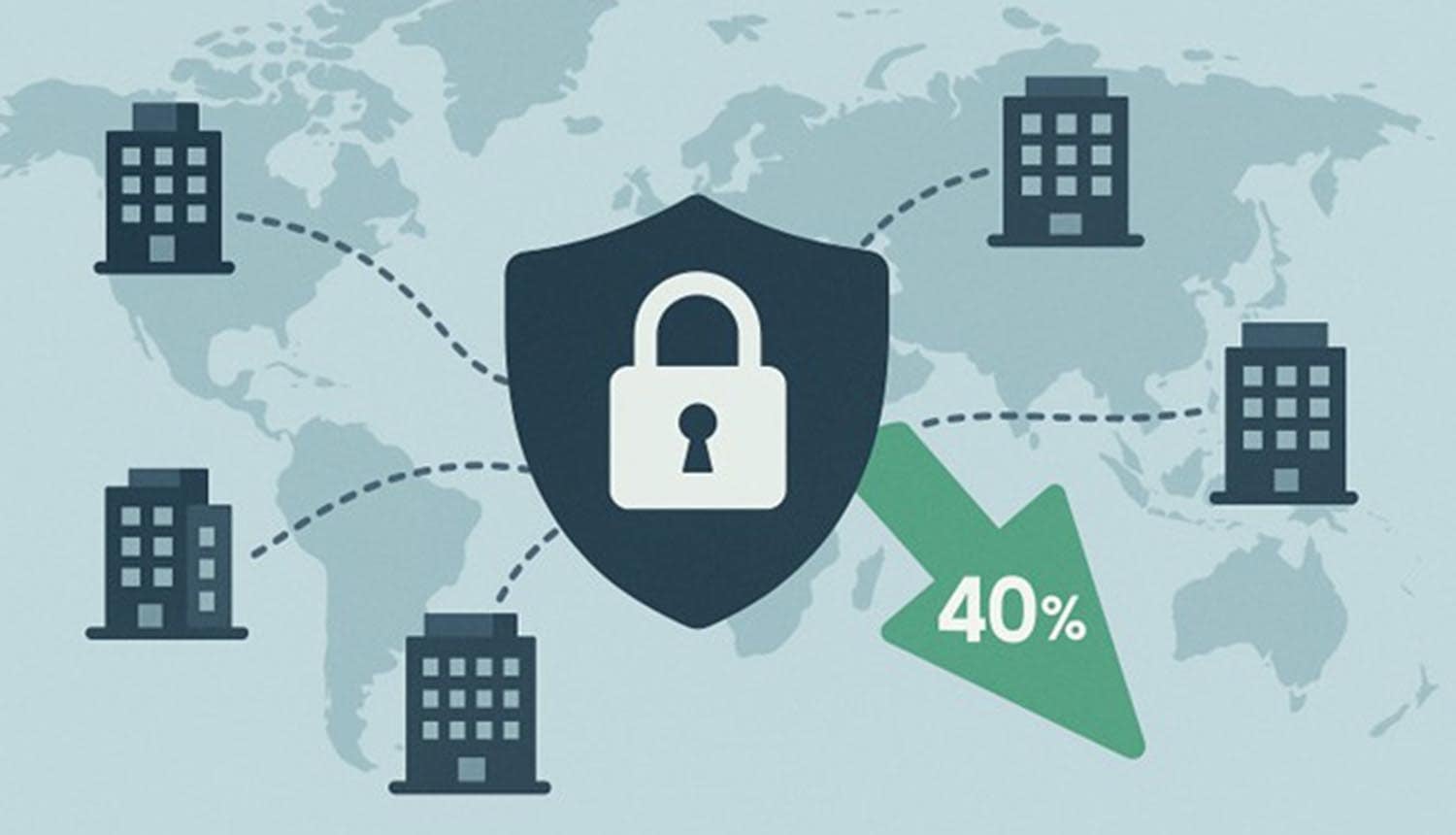

Multi-site certification is the process of rolling one ISO 27001 program across all your offices instead of running separate audits. Done badly, it’s expensive. A single-site, three-year cycle runs about $50,000–$200,000 according to accreditation benchmarks, and every extra location adds flights, hotels, and day-rate fees. Thankfully, the 2024 updates to ISO/IEC 27006-1 and IAF MD 1 let auditors sample sites, run more interviews remotely, and size audit time by total headcount—not site count. Apply those changes and you can trim multi-site audit spend by roughly 40 percent—money you’d rather invest in real security.
Why multi-site ISO 27001 costs spike
A multi-site audit cost spike is what happens when every extra location drags new travel days, scope creep, and prep work into the budget—without adding much assurance.
Here’s why your bill climbs:
- Travel and logistics. Each on-site day tacks on flights, hotels, and per diems—even when the registrar sends regional staff. Those hard costs often add $3,000 per location, according to Perry Johnson Registrars flight-cost guidance.
- Expanding scope. Warehouses, sales satellites, and data centers run distinct processes the auditor must test. Before IAF MD 1:2024, audit-day math was tied directly to site count, so every new address meant more billable hours.
- Duplicate preparation. If every branch keeps its own playbook, you’ll repeat evidence pulls, training, and gap-closing work long before auditors arrive.
- Outdated rule sets. Earlier frameworks capped remote interviews and forced a linear “more sites = more audit days” formula. The 2024 revisions to ISO/IEC 27006-1 and IAF MD 1 remove those brakes—but only if you restructure the program to qualify.
When those forces collide, a focused review turns into a two-month roadshow. In the next eight tactics we’ll show you how to reverse that spiral and reclaim budget.
Tactic 1: use site sampling (IAF MD 1:2024).
Site sampling is a statistical shortcut in IAF MD 1:2024 that lets a registrar certify a representative handful of offices instead of visiting every site. Under the standard’s square-root rule, an organization with 25 locations needs only five visits in year one; surveillance audits drop to about three.
Each skipped trip wipes out about US$3,000 in airfare, lodging, and per-diem. Skip 20 site visits across the three-year cycle, and you’ll save roughly US$60,000, before counting smaller auditor day-rate cuts.
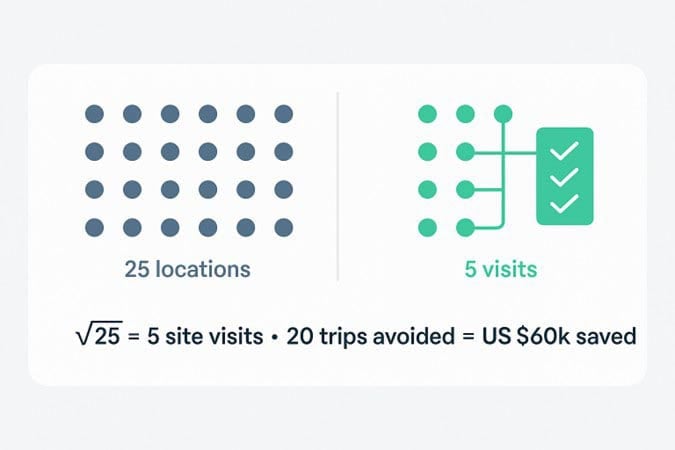
To qualify, every branch must operate under a single, centrally managed ISMS, as reinforced in ISO/IEC 27006-1:2024. When policies, risk registers, and corrective actions flow through the shared hub, auditors can trust that the sample speaks for the whole group.
Action tip: Map your locations, run the square-root math, and lock the reduced visit count into the contract up front, and you’ll see the travel budget stay flat while the certificate still covers every address.
Tactic 2: centralize your ISMS.
A centralized ISMS is a single policy hub that guides every location under one ISO 27001 certificate. Understanding what ISO 27001 certification means is key here, because the certificate applies to the whole program, not just one branch. When all branches pull policies, risk registers, and corrective-action logs from that hub, the auditor reviews the playbook once, then spot-checks evidence instead of repeating interviews in five cities. Both IAF MD 1:2024 and ISO/IEC 27006-1:2024 point to that shared system as the cornerstone of multi-site assurance.
Skip five duplicate incident-response interviews, and you trim one audit day (about US$2,500 in fees and travel). Multiply that across a twenty-office program and the savings scale quickly.
A single ISMS also makes site sampling possible, keeps evidence prep light, and lets one fix ripple across every branch. In practice, the team spends less time chasing documents, the registrar spends fewer hours on-site, and the finance line gets noticeably thinner.
Action tip: Build the central hub first, roll it out location by location, and every later tactic—remote interviews, bundled audits, lean scoping—delivers a larger slice of savings.
Tactic 3: shift interviews online with flexible remote auditing.
Remote auditing is the practice of running ISO 27001 interviews and document reviews over video rather than on-site whenever no physical walk-through is required. The 2024 revision of ISO/IEC 27006-1 erased the old 30 percent ceiling on remote time, so your registrar can now handle policy discussions, log pulls, and management debriefs from a webcam while reserving one carefully planned visit for server rooms and badge readers.
Swap just two travel days in a three-site sample for video calls and you keep about US $3,000 in your pocket once flights, hotels, and downtime disappear. Auditors often compress the same agenda into fewer billed hours, so the day-rate line shrinks alongside the travel bill.
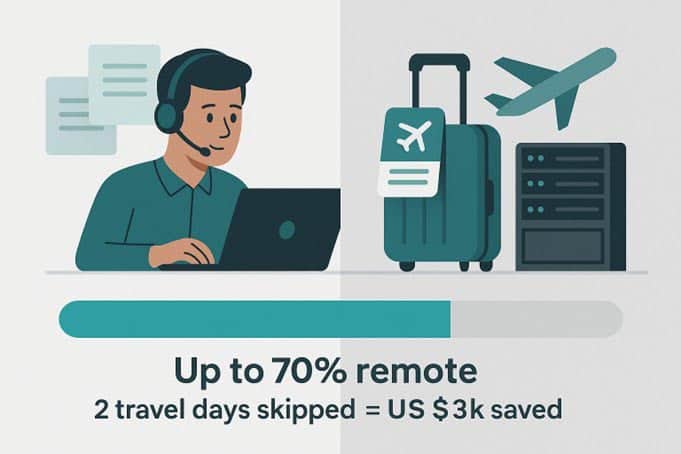
To make the switch simple, list every control that truly needs eyes on hardware, then stage those inspections back-to-back during a single visit. Everything else can run in consecutive video blocks, freeing your team from extra airport runs and letting the registrar focus on evidence instead of logistics.
Action tip: confirm with the certification body that all policy and log reviews default to video, and lock in the lone site visit six weeks early so travel costs stay predictable while your audit calendar stays short.
Tactic 4: keep the scope lean.
Scope, in ISO 27001 terms, is the boundary that tells auditors which sites, systems, and teams your certificate covers. When you pull every office and secondary system inside that fence, each one spawns interviews, evidence pulls, and fresh risk entries. Trim the boundary to what customers and regulators care about, such as your primary data center, the product-engineering floor, and the SaaS platform that ships code, and let low-risk sales or marketing outposts wait their turn.
Every additional location usually adds one to two audit days. At US$2,500 per day, tacking on three low-value sites can burn about US$7,500 without moving the security needle. A tight scope does more than protect the budget. It leaves auditors with fewer controls to sample, gives your team a single, shorter corrective-action list, and sets up a calm expansion path: new branches slide into the existing ISMS later, rather than forcing a ground-up certification.
Action tip: draw the line early, write it into contracts, and label it clearly in marketing collateral. When stakeholders know exactly what the certificate covers, trust stays intact and your finance team enjoys a lighter invoice.
Tactic 5: bundle audits and certificates.
Bundled auditing is the practice of bringing multiple standards or business units into one audit plan so your registrar’s team can cover everything in a single trip. Because controls like change management and supplier vetting overlap, you can fold ISO 27001 together with other ISO Standards like ISO 27701 for privacy or ISO 9001 for quality without reinventing the checklist.
Adding a second standard usually takes only four to six extra audit hours. At US$2,500 per day, you’re paying about US$1,200 instead of the US$5,000 a separate visit would cost. The same math works inside your walls: when two teams aim for separate certificates, rolling them under one multi-site program means a single certificate fee, one surveillance schedule, and one shared calendar. You host auditors less often, and finance sees total audit days fall by twenty to thirty percent across the three-year cycle.
Action tip: lock the bundle into your contract early and ask the registrar to quote by total audit hours, not headcount. You keep the scope tight, the travel bill flat, and your certificate roster short, while customers see a single, blended assurance story.
Tactic 6: stage your audit calendar for calm cash flow.
Audit calendar staging is the art of lining up ISO 27001 events so your spending spreads evenly instead of spiking in year one. A ten-day certification followed by two lighter surveillance years can feel uneven, but a bit of planning turns that spike into a smooth glide path.
Action tip: First, cluster the sampled site visits. When the registrar sees every chosen location in the same week, one auditor can often finish four offices in six days instead of eight, saving about US$3,000 in flights, hotels, and duplicate kickoff meetings. Next, lock dates at least a quarter ahead. Miss the surveillance window and a partial re-audit can add two extra days and roughly US$5,000. Plan the calendar, watch it, and nudge it before costs swell. You’ll keep auditors efficient, your team focused, and your cash flow steady for the full three-year cycle.
Tactic 7: let automation do the heavy lifting.
Compliance automation is software that gathers ISO 27001 evidence, such as policies, access logs, and ticket closures, without manual screenshots or spreadsheets. Compliance automation platforms such as Vanta automatically funnel those proofs into an auditor-ready portal, so you skip the scavenger hunt and focus on actual risk. For a deeper look at the platforms that automate this evidence collection, check out this guide to the best GRC tools for SaaS companies. One vendor study pegs the payoff at up to 60 percent less total audit effort, and the math holds up: if a ten-day certification shrinks to six, you pocket about US$10,000 in day-rate fees before you even count reclaimed staff hours.
Auditors notice the difference, too. Start a session with a neatly indexed portal instead of a frantic screen share and they often wrap half a day early, trimming the invoice even further. The benefits ripple past year one: your team gets evenings back, finding zero in on genuine gaps, and next year’s surveillance audit arrives with most of the evidence already filed.
Action tip: pick the noisiest control families first—access reviews, change tickets, vulnerability scans—and route them through an API or scheduled export. You’ll watch the inbox quiet down, the agenda tighten, and the budget line drop without booking one extra flight or hotel room.
Tactic 8: negotiate with the right certification body.
Certification-body negotiation means treating your registrar like any other vendor, asking for transparent pricing, and aligning fees with the new sampling rules. Every accredited body follows the same ISO playbook, yet their quotes can differ by ten to twenty percent. A side-by-side of three proposals often shows about US$8,000 of daylight over a three-year engagement.
Action tip: Start by asking each registrar for a line-item breakdown: auditor day rate, admin fee, estimated travel, and the exact way they size site-sampling. Then lean on two pressure points. First, tie pricing to the sampled locations so you’ll pay only for the offices that get a visit. Second, insist on local auditors whenever possible so flights turn into car rides. A registrar willing to lock both terms into the contract usually lands at the low end of that price spread, leaving more budget for real security work instead of airfare and overhead.
FAQ – minimizing ISO 27001 audit costs
Q1. Do we have to audit every site every year?
No, and that’s the whole point of multi-site sampling in IAF MD 1:2024. At certification your registrar visits roughly the square root of your location count. If you run sixteen offices, only four get a visit in year one. Surveillance audits trim the sample to about 60 percent of that figure, so you usually see just two site visits in years two and three. Every branch still works under one centrally managed ISMS, but you avoid ten to twelve on-site days each cycle and keep about US$30,000 in the budget without weakening the certificate’s credibility.
Q2. What happens when we add a new site after certification?
Adding a branch once you’re certified triggers an extension audit, not a full restart. Under IAF MD 1:2024, the registrar schedules a focused check, usually one on-site day that runs about US$3,000, or a half-day remote visit if most controls are digital. Pass that review and the new address slides onto your existing certificate, so it becomes part of the normal rhythm.
The only change is sample size. Moving from nine to ten locations nudges the square-root rule from three to four visits in year one—a small trade-off compared with launching a separate certificate. Internal prep stays light, too: you plug the new site into the central ISMS, align its playbooks, and get back to work.
Q3. Can the entire audit be remote to avoid travel costs?
Not quite. Physical controls still need a human on site at least once during the cycle. The 2024 update to ISO/IEC 27006-1 lifted the old thirty percent ceiling on remote time, yet it reminds registrars that server-room locks, badge logs, and environmental checks demand eyes on hardware.
The practical route is a hybrid audit: handle policy interviews and evidence reviews over video, then fold every must-see inspection into one carefully planned visit. Trade just two travel days for video calls and you save about US$3,000 in airfare and hotels, and auditors often finish the remote agenda faster, so they’ll trim the day-rate line as well.
Test camera angles, bandwidth, and screen share tools a week before kickoff. If the tech hums, the auditor can focus on risk instead of wrestling with Wi-Fi, and everyone reaches the finish line cheaper and sooner.
Q4. Is trimming the scope a smart way to save money?
Yes, as long as you draw the line with purpose. Scope trimming means certifying only the locations or systems that handle sensitive data and leaving low-risk sites for later. When you narrow that boundary, you walk through fewer rooms, brief fewer people, and fix a shorter list of findings. One registrar’s fee guide shows that a two-site scope often costs about 30 percent less than a six-site scope, saving roughly US$8,000 to US$10,000 in the first year alone.
The plan is simple: certify the core data center, the product team, and the SaaS platform first. Prove those controls work. Later, when budgets or customer demands grow, fold each satellite office into the same ISMS one at a time. Every add-on becomes a predictable micro-project instead of a fresh certification grind. Label the certificate “corporate HQ and cloud platform only” so customers know exactly what’s covered, and you’ll keep trust high while finance pockets the ISO 27001 scope-reduction savings.
Q5. If one site flunks the audit, do we lose the certificate everywhere?
Not by default. A site-level non-conformity is a finding that fails one branch without proving the whole management system is broken. When auditors flag a major lapse, they first widen the sample, visit a few extra locations, and probe the central ISMS. If the gap is local, say a firewall rule missed only in Denver, the registrar can suspend or even drop that single site while leaving the wider certificate intact.
Time and money still matter. A suspended branch usually triggers a follow-up visit within ninety days; at about US$2,500 a day plus travel, that adds roughly US$4,000 and distracts your ops team. Keep a steady internal-audit rhythm and we’ll spot cracks before the registrar does. Quick, organization-wide fixes turn a potential multi-site suspension into a brief note instead of a headline.
Conclusion: plan your forty-percent playbook.
Site sampling trims auditor days, a unified ISMS erases duplication, and remote interviews wipe out airfare with a click. Layer in lean scoping, bundled audits, calm scheduling, automation, and firm vendor negotiation, and the numbers add up: a three-year ISO 27001 program that once cost about US$150,000 can drop below US$90,000.
Your next move is simple: pull last year’s audit spend, line it up against each tactic in this playbook, and sketch a phased plan before budget season hits. Every dollar you shave from audit logistics is a dollar you’ll put into real defenses instead of paperwork.
