
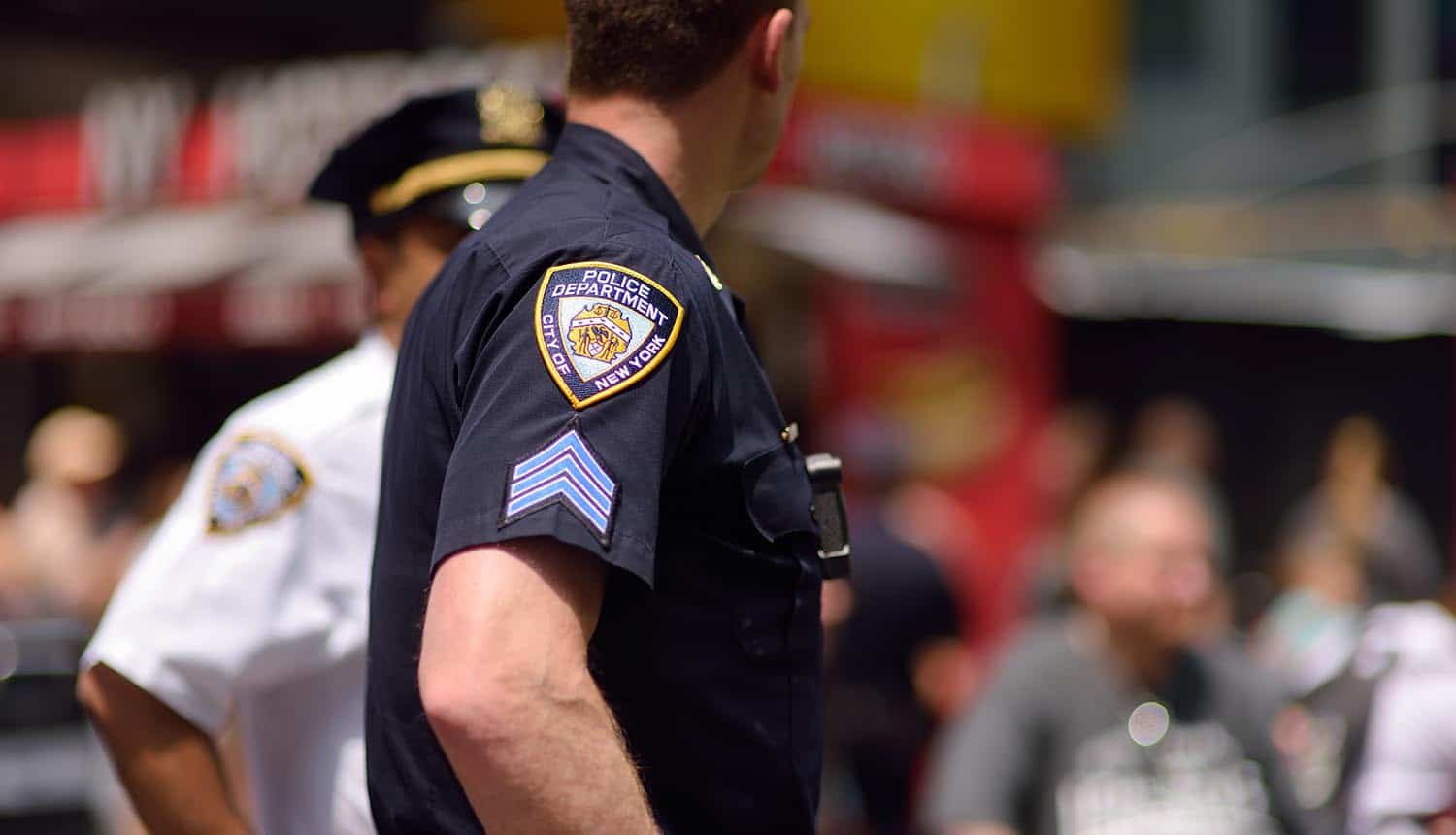

Privacy groups are expressing concerns about the New York Police Department’s decision to join Ring Neighbors, citing prior incidents of racial bias and vigilantism. Critics sometimes refer to the popular home security system as “crowdsourced surveillance,” largely due to the company’s existing relationships with about 2000 police departments around the country.
The NYPD has promised not to monitor Ring Neighbors around the clock, in keeping with Amazon’s rules that require police to post public requests for assistance rather than directly contacting users for their footage. Critics contend that Ring systems allow individual homeowners to unilaterally turn public spaces into police surveillance zones as they often capture images from beyond the property’s borders, and that a sort of “mob mentality” that can form on Ring discussion boards can lead to profiling of (and even violent acts against) innocent people.
Country’s largest police force joins Ring Neighbors
Thousands of police departments have already forged similar agreements with Ring Neighbors, but NYPD is by far the largest to tap into the system for surveillance purposes. The new program was scheduled to commence by November 9.
NYPD’s announcement stresses that it does not monitor the app “around the clock.” The way it describes its use of Ring Neighbors, to “view, post and respond” to information posted by users, tracks with the privacy rules Amazon has set for its police partners. Law enforcement cannot tap into user camera feeds without permission, and cannot even make direct requests of users; it must post a general public request instead that users can opt to respond to, but it is also allowed to respond to public posts that Ring Neighbors users choose to make.
Despite the NYPD’s assurances, the announcement has met with condemnation from an assortment of privacy and civil rights groups, One of these, Surveillance Technology Oversight Project (S.T.O.P.) of New York, cites the possibility of vigilantism and racial profiling. It also suggests that the NYPD’s participation in Ring Neighbors could lead to increased police violence.
STOP cited a recent incident in Florida that led to an attempted felony murder charge for a homeowner. A woman had received a package meant for a different address and went to that home to leave it outside the door. This generated a Ring alert, and the resident of the home and his 15 year old son armed themselves with firearms and rushed outside where the woman was sitting in her car making a phone call. After pointing the guns at her and demanding that she exit the vehicle, the woman fled in a panic (believing it was an attempted carjacking) and the pair shot at her car as she drove off.
Ring Neighbors has also caught flak for providing an environment that sometimes fosters racial bias, as users of the cameras are encouraged to virtually meet up on the app and discuss people that are spotted by the devices. In some cases, these interactions can become racially charged. The app can also cause relatively petty incidents, or even unfounded suspicions, to be escalated to either personal vigilantism or unnecessary police involvement as Ring Neighbors posters whip each other up and goad others into taking more extreme actions than they had originally intended to.
Surveillance concerns as slices of private neighborhoods increasingly subject to internet-connected video monitoring
Some of the specific concern about NYPD joining Ring Neighbors is not just due to the department’s massive size, but also a long and questionable history of surveillance programs. After the 9/11 attacks occurred, the department embarked on a long and complex surveillance campaign directed at Muslim residents of the region, in some cases employing informants and engaging in photo and video surveillance of entire neighborhoods. This unit operated for over a decade before being forced to admit it had never generated a real lead and being pressured into disbanding.
The department has also been embroiled in controversy over use of facial recognition technology, an issue that has bubbled up again as crime has spiked and sentiment for tougher law enforcement action grows. The department has been taken to court several times over the past decade for its use of this type of surveillance technology, and current mayor (and former police chief) Eric Adams wants to expand to passive facial scanning at the entrances to certain public facilities like schools and entertainment venues.
There are also concerns about who NYPD shares collected facial data with. The 2021 Public Oversight of Surveillance Technology (POST) Act forced the department to publicly report the surveillance technology it uses, but it stopped short of sharing how long it holds this information for and who it shares it with.
Ring Neighbors has attempted to assuage privacy concerns with a fact sheet, which says that users can expect an in-app announcement when a local law enforcement agency partners with the service and begins using it.
